



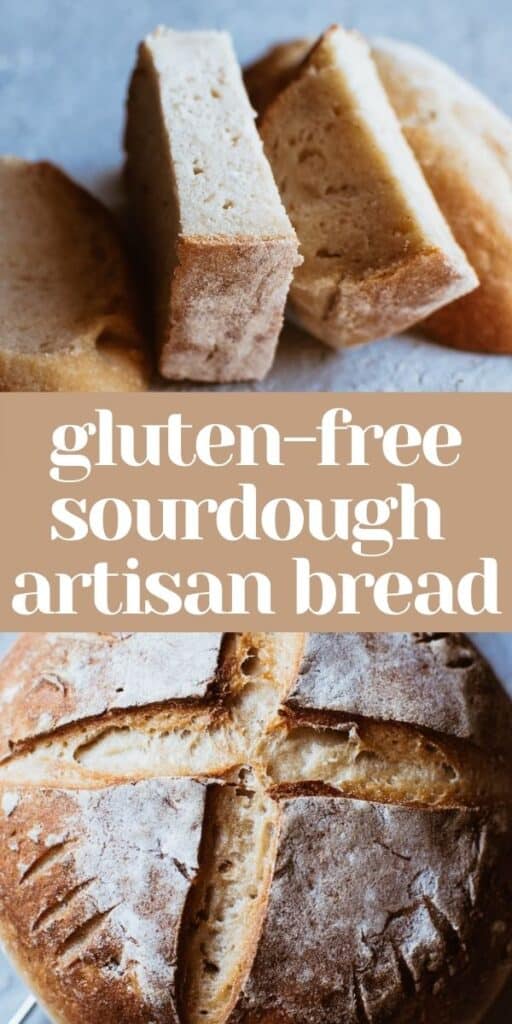
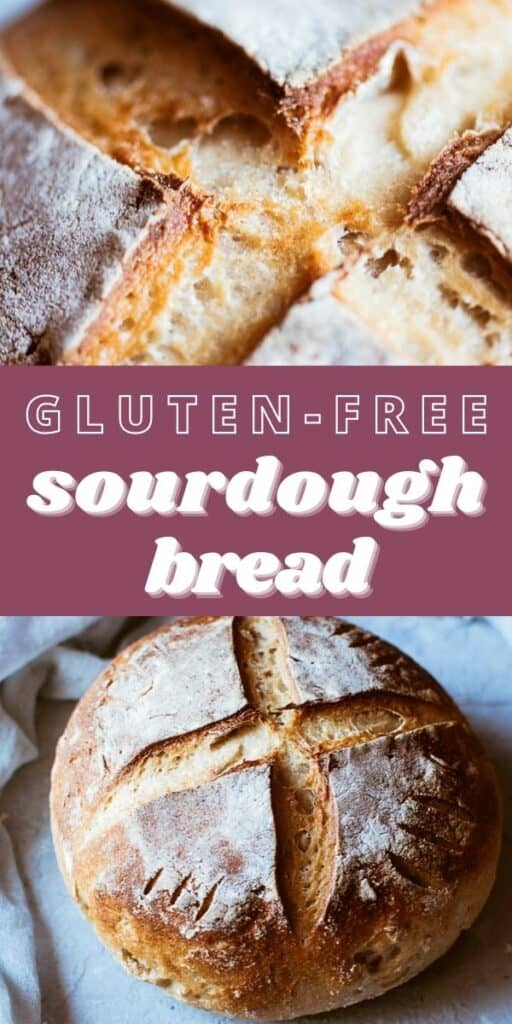
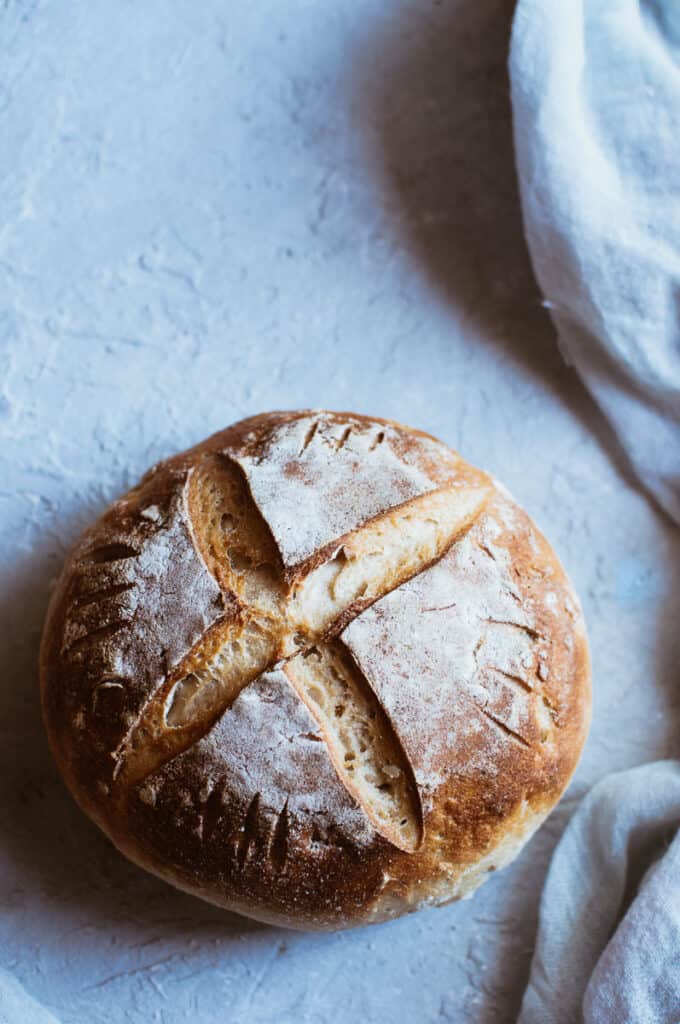
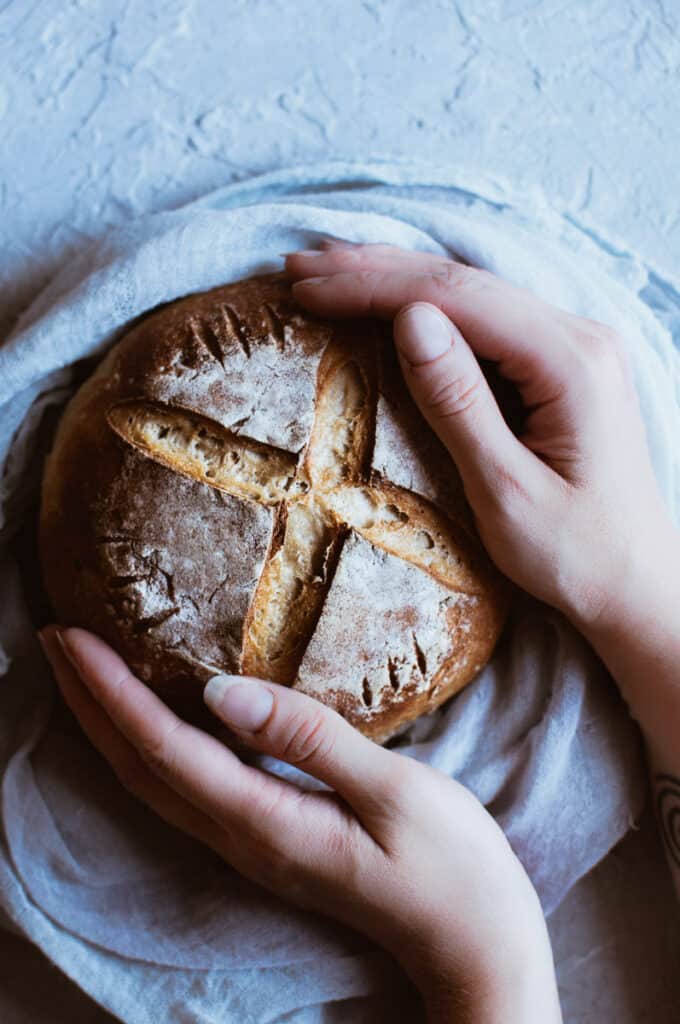
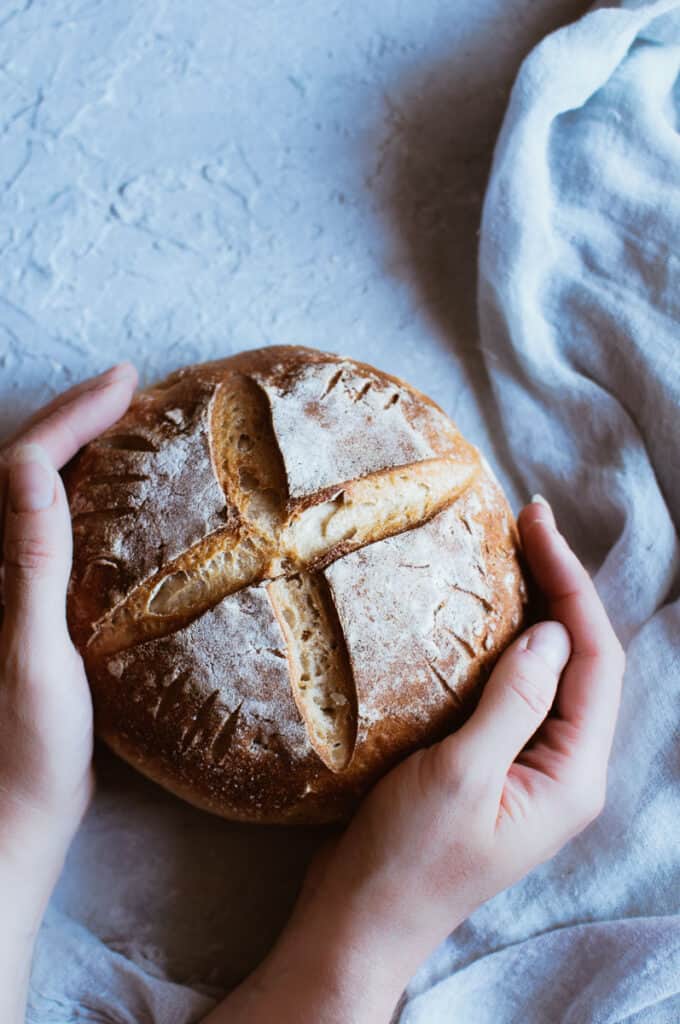
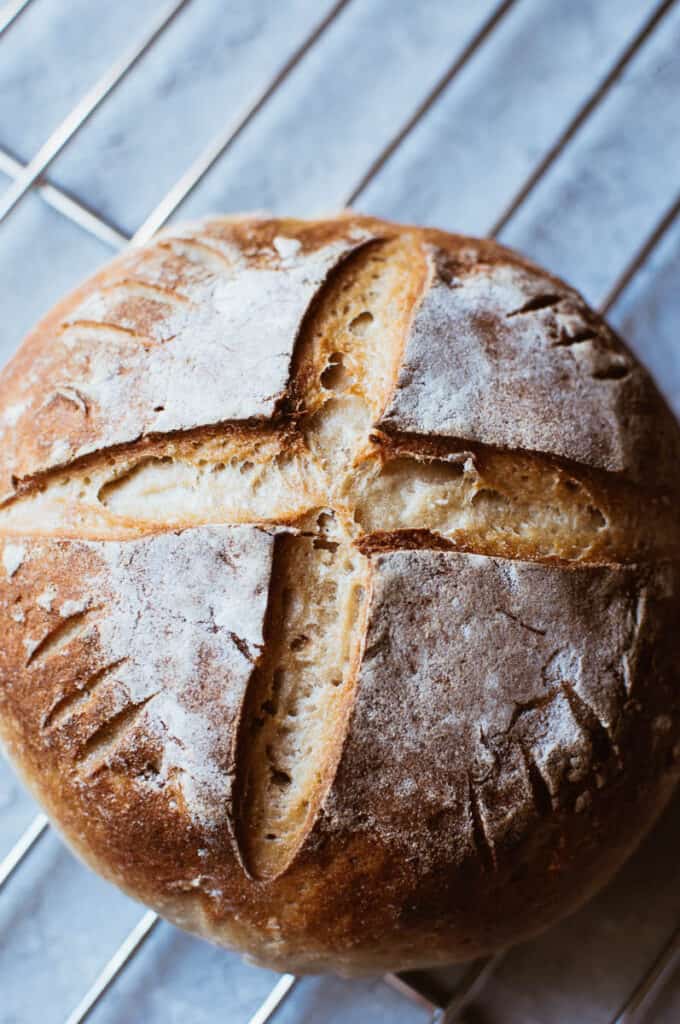
An easy Gluten-Free Sourdough Bread recipe with a perfect golden crust and soft & flavorful middle. This rustic-style boule is dairy-free, to boot!
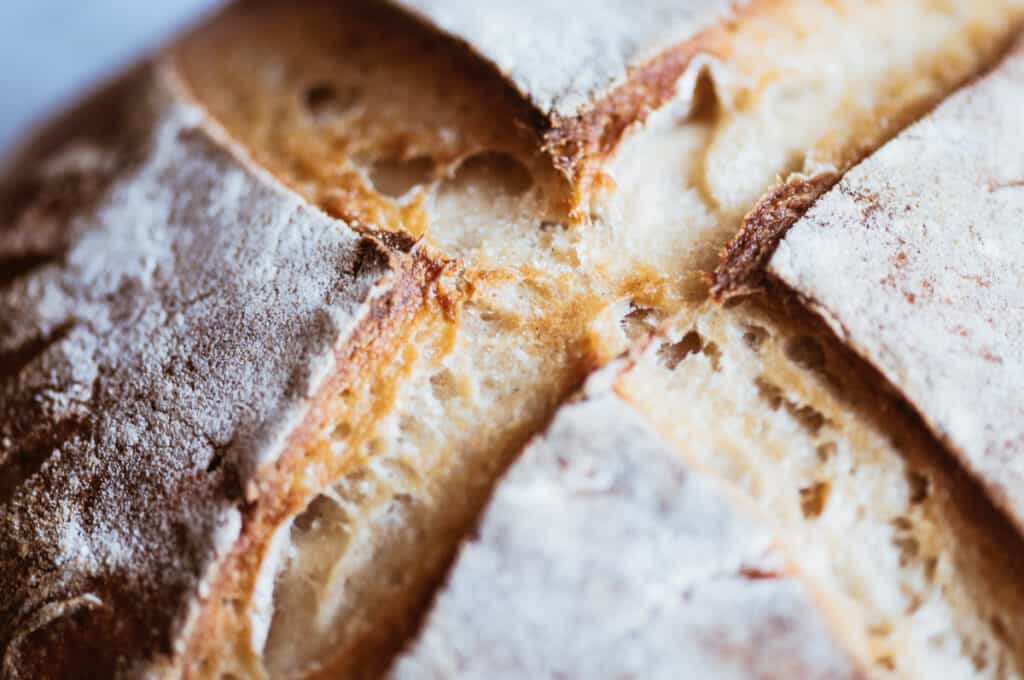
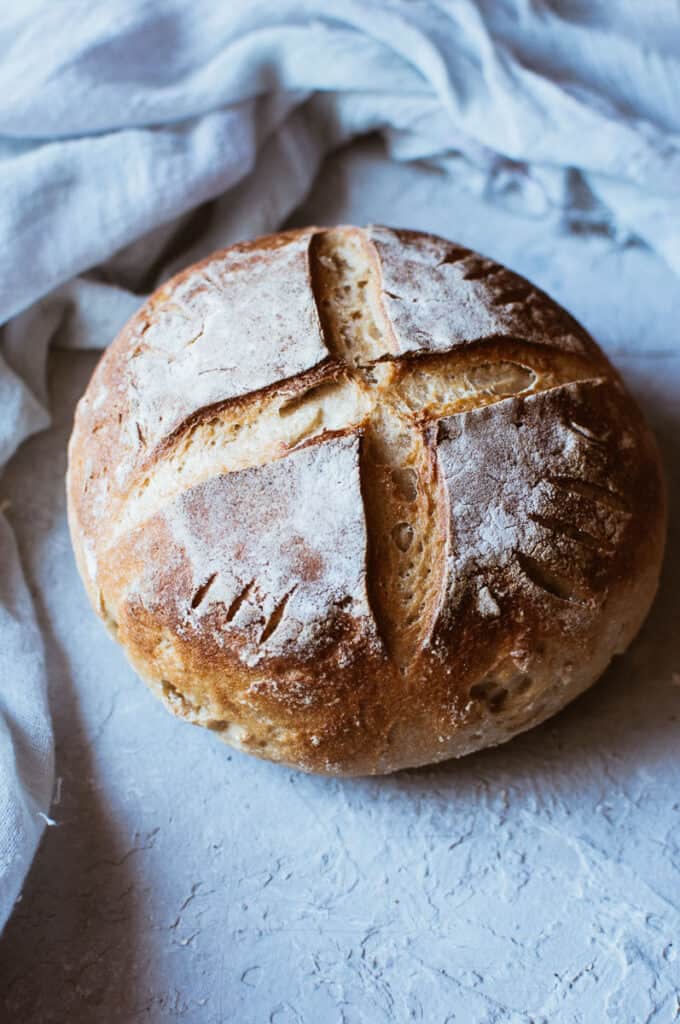
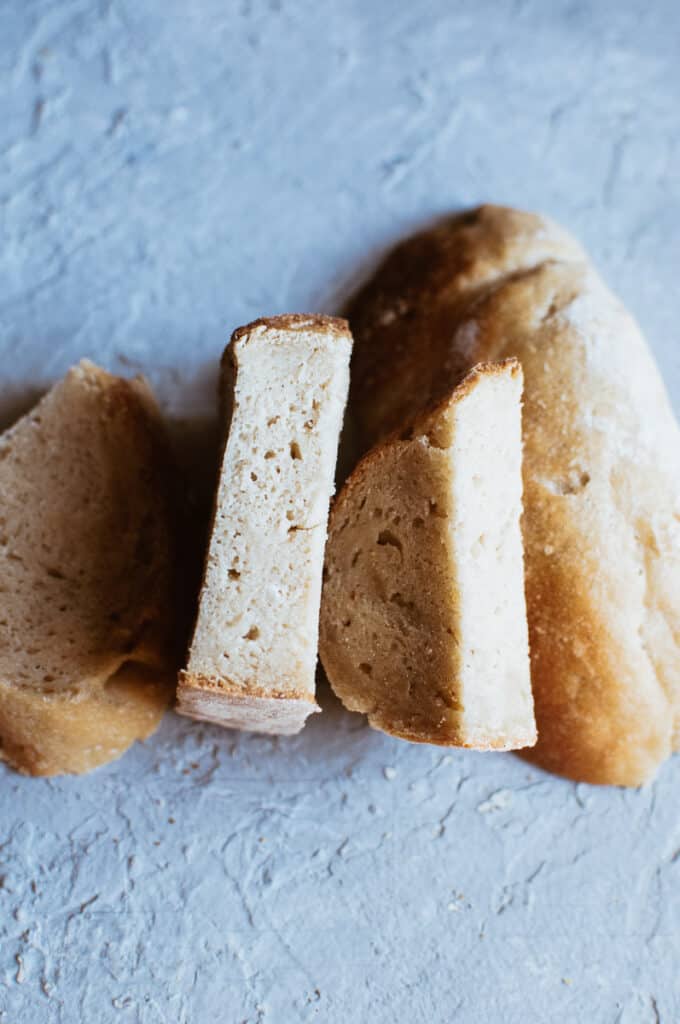
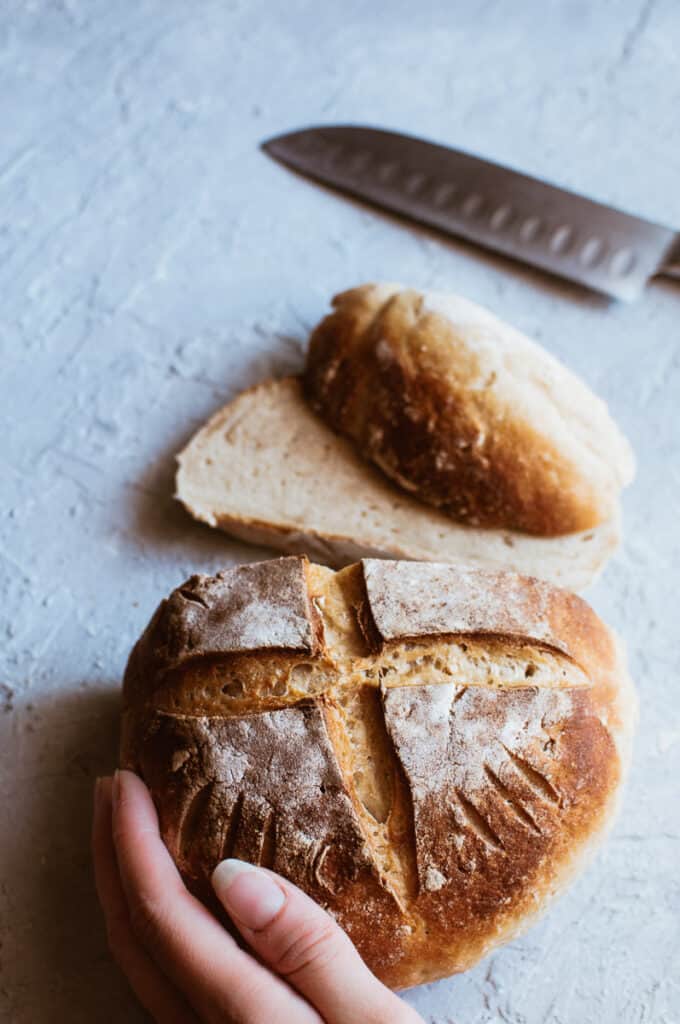
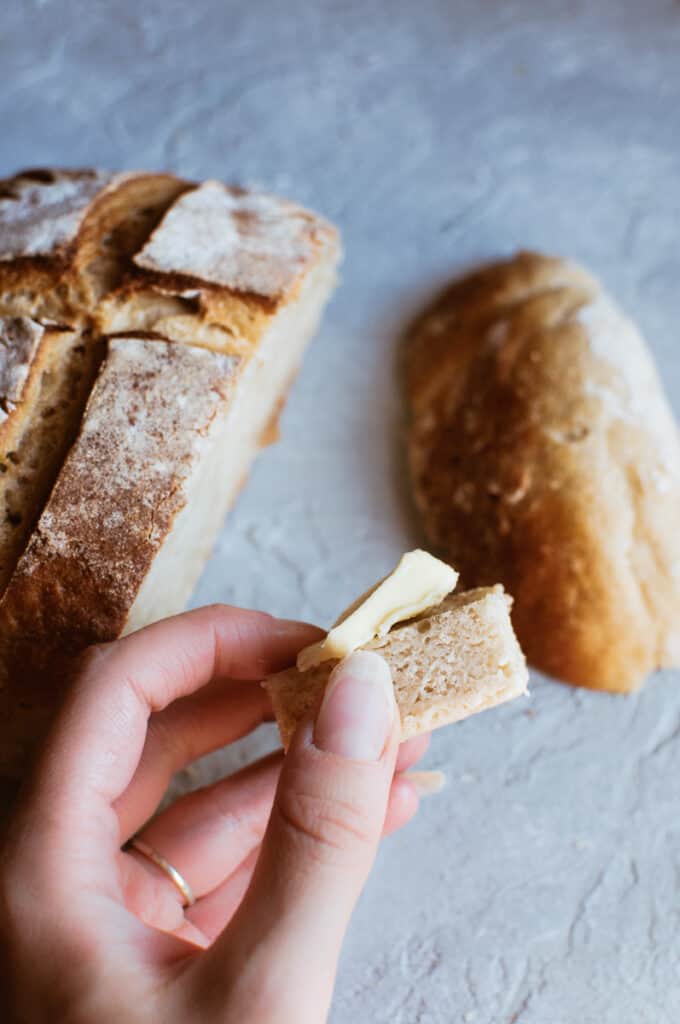
Where do I start with this one? This has got to be one of the most magical recipes I’ve ever shared. The bread is just so gosh darn good, it’s really hard to tell that it isn’t loaded with gluten. The flavor is truly sourdough. The crispy crust and soft interior make for such a lovely combo that’s great on its own, alongside butter, fruit spread or for use in sandwiches, toast—you name it! If you are new to gluten-free baking or a bread ferment, do not be intimidated, this loaf of bread it worth it.
💛 Why You Will Love This Recipe
- Easy to make.
- Super flavorful and fragrant with a rich sourdough taste.
- Wholesome and hearty.
- Great for beginner and experienced bakers alike.
- Reminiscent of gluten-filled bread.
- Gluten-free, dairy-free, nut-free, soy-free, corn-free, refined sugar-free.
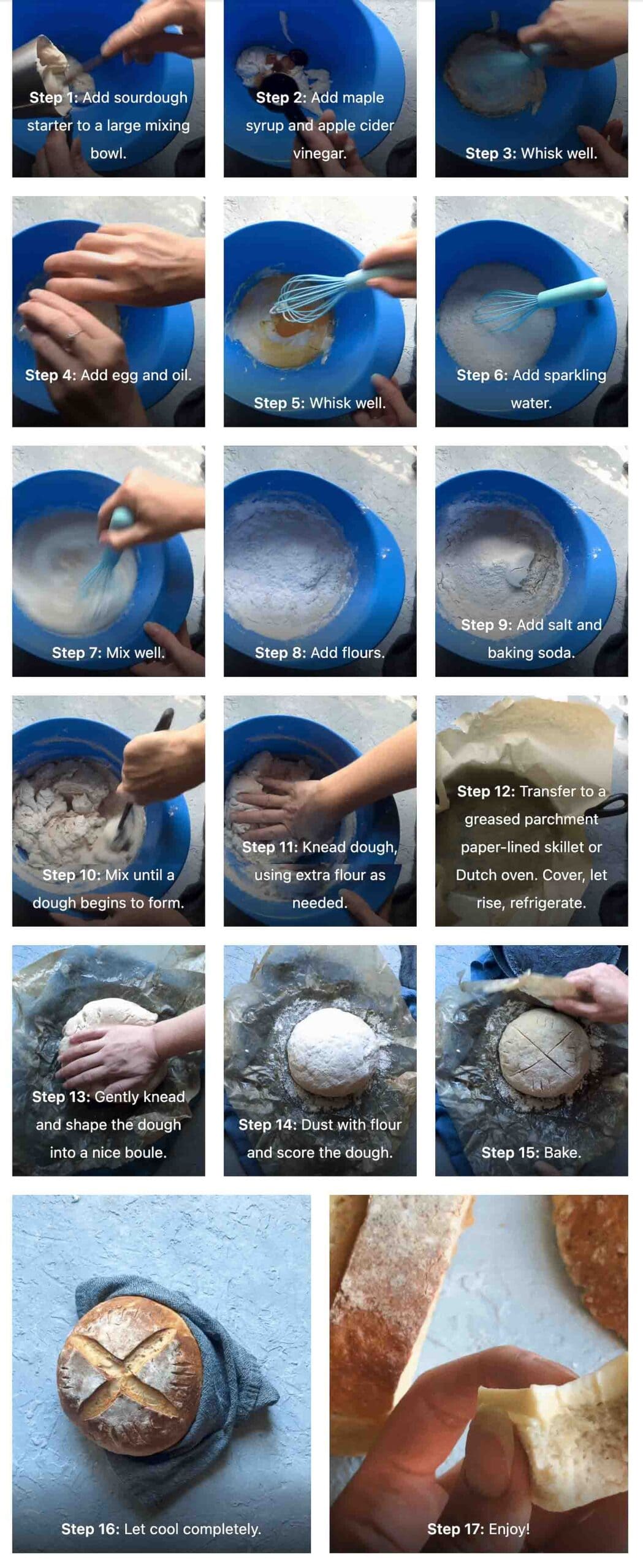
🥣 How-to Make Gluten-Free Sourdough Bread
My gluten-free sourdough starter recipe.
❓ Frequently Asked Questions
You can use oat flour, millet flour, or a gluten-free flour blend in this GF sourdough recipe.
This is my gluten-free sourdough starter recipe, however, any active sourdough starter should work just fine!
I find the egg adds some nice structure to this loaf that is more reminiscent of the gluten-filled variety of bread, but you can replace it with 1 flax egg for similar results.
Yes, you can. The psyllium adds some nice texture and helps retain moisture in the bread, but is not necessary.
🍞 Gluten-Free Bread Recipes You May Also Like
The Best Gluten-Free Vegan Bread
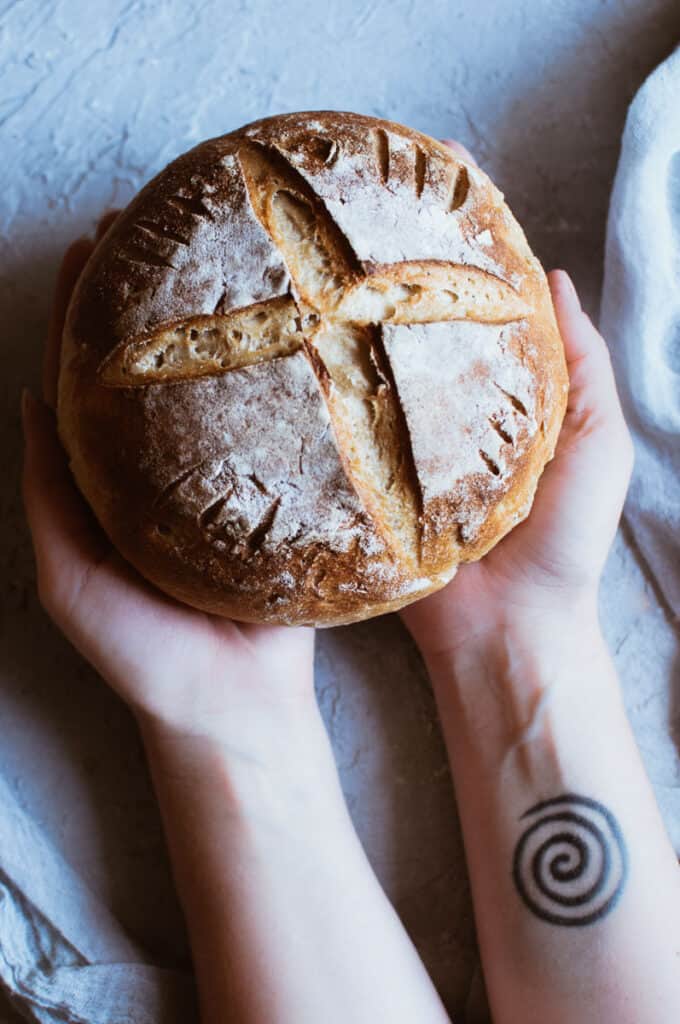
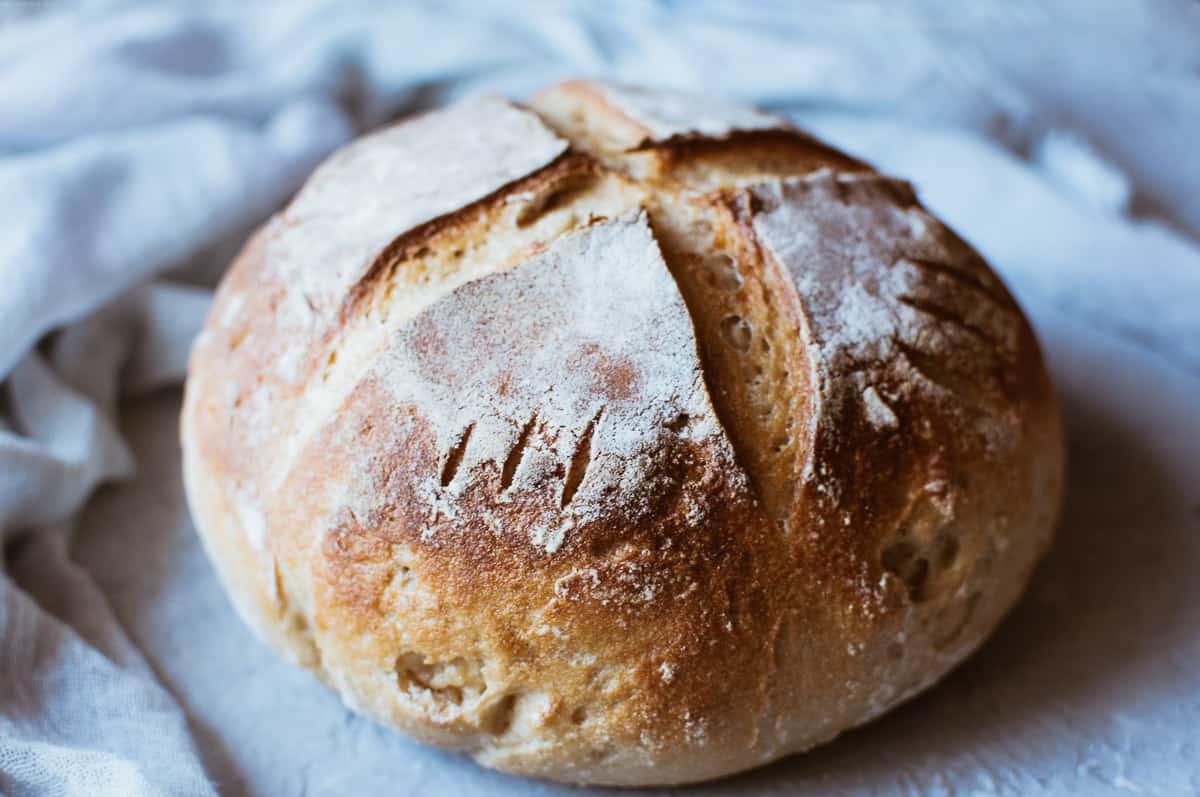
Gluten-Free Sourdough Bread
Ingredients
- 3/4 cup gluten-free sourdough starter (click for recipe)
- 2 cups sparkling water or water
- 1 egg
- 2 tablespoons olive oil
- 1 tablespoon maple syrup or honey
- 2 teaspoons apple cider vinegar or vinegar
- 1½ cups gluten-free all purpose flour (with xanthan gum) plus extra for coating
- 1 cup tapioca flour
- 1 cup brown rice flour
- 1/2 cup millet flour
- 1 tablespoon psyllium husk powder
- 1 teaspoon sea salt or pink salt
- 1/4 teaspoon baking soda
Method
- In a large bowl add starter, water, egg, oil, maple syrup, and vinegar. Whisk well.
- Add remaining dry ingredients. Mix until a dough begins to form.
- Knead the dough, adding flour as needed, to form a smooth but still slightly tacky round of dough.
- Place in a greased bowl or in a greased parchment paper-lined pan. Cover and let rise overnight or at least 6 hours.
- Place the dough in the refrigerator for 4 hours.
- Preheat oven to 425°F. Place a cast iron skillet or dutch oven into the oven while it preheats, for at least 30 minutes.
- Remove the dough from the refrigerator and knead slightly to re-form a nice round of dough. Optionally, score the dough with any design of your choosing. Allow the dough to rest at room temperature while the oven and pan preheat.
- After 30 minutes of resting time, place the dough into a greased parchment paper-lined dutch oven or cast iron skillet. If using a dutch oven, place a few ice cubes on the outside of the parchment, but on the inside of the pan before placing the lid and on and placing into the oven. If using a cast iron or other oven-safe skillet, place a pan of water on the bottom rack of the oven right after place the bread on the middle rack. Keep the oven door closed the entire time to ensure proper steaming.
- Bake for 35-40 minutes or until the bread has formed a nice golden crust, is firm and sounds hollow when you tap on the bottom.
- Let the bread cool completely before slicing for best results. Slicing too soon can result in a gummy or dense bread.
- Slice and enjoy!
Notes
Nutrition
Nutritional information is automatically calculated using a third-party calculator and is an estimate only.

Hi! Very excited to make this! The all purpose flour you link is a 1-1 baking flour. Is that correct or should I purchase a gluten free flour that is specifically all-purpose rather than baking?
Hi Rae! Yes! A 1-to-1 baking flour is essentially a gluten-free all-purpose flour blend formulated for baking, so the one linked in the recipe works perfectly. The important thing here is to use a gluten-free all-purpose or baking blend that already contains xanthan gum. I hope you enjoy the bread! 😊
Hello Kristen –
Big fan of your blog and your recipes!
I made your GF sourdough starter and then this bread. It was tasty and looked fine on the outside but was quite dense. The second time around I used less flour (was pretty sticky before putting it in the refrigerator) and let it rise longer and although it was less dense than the first time, still a heavy loaf. Would you say yours come out like that? I followed the ingredients to a tee (Btw, I did not use sparkling water). Any suggestions? I am fairly new to sourdough bread making and especially GF.
Thanks so much!
Hi Keri! Thank you so much for the kind words! 🙂 This is definitely a hearty, rustic-style loaf, but it shouldn’t be overly dense. Since you’ve already experimented with using a little less flour and giving it a longer rise, I’d take a look at your starter next. Was it very active and bubbly when you used it? An underactive starter is one of the most common causes of a dense loaf.
I’d also make sure the bread cools completely before slicing, as cutting into it while it’s still warm can make the interior seem much denser. And while the dough should be slightly tacky, I wouldn’t reduce the flour too drastically, as that can affect the structure of the loaf. I hope this helps, and I’m happy to troubleshoot further! 🙂
looking forward to making my first gluten free loaf!! The only thing I don’t have on hand is the millet flour. Is there a reliable substitute or should I wait until I can pick some up for best results?
Hi, Jessica! Thank you for visiting. You can replace the millet with additional GF all-purpose. I hope this helps! 🙂
hi Kristen! loved your recipe!! first sourdough loaf I have ever tried!
everything went great except the loaf is not as tall as I would like!? it’s a little flat! any suggestions!!???
Hi Brittany! I’m so glad you enjoyed it, especially for your first sourdough loaf! 😊 If everything else turned out well but the loaf was a little flatter than you expected, I’d first make sure your starter is very active and bubbly when you use it. When shaping, you also want to re-form the dough into a nice round so it has some structure going into the oven. The size of your baking vessel can make a difference too. A wider Dutch oven or skillet gives the dough more room to spread outward, while a smaller vessel can encourage a taller loaf. I hope that helps, and congrats on your first loaf! 🙂
Hi! Mine is still VERY dense any suggestions?
Hi, Olivia! I’m sorry to hear that! Dense gluten-free sourdough is most commonly caused by an underactive starter or not allowing the dough to rise long enough. Did you happen to make any substitutions to the recipe? If not, was your starter nice and bubbly before using it? Also, be sure to let the bread cool completely before slicing, as cutting into it too soon can make it seem much denser. I’d be happy to help troubleshoot! 😊
My first time making gluten free sourdough bread from my starter. I loved this recipe.
One question I have is have you ever made the bread with inclusions? I wanted to do cranberry walnut or cinnamon? Tips/suggestions!?
Hi Haley,
Thank you so much! I’m so glad you enjoyed the recipe! 😊
Both cranberry walnut and cinnamon would make delicious additions. As a general guideline, I’d keep the total mix-ins to about 1 to 1 1/4 cups so the loaf isn’t weighed down too much. Dried fruit and chopped nuts work especially well since they don’t add much extra moisture.
If you’re making a cinnamon loaf, I’d recommend mixing the cinnamon into the dry ingredients so it’s evenly distributed throughout the dough. Then, simply fold in any dried fruit or nuts once the dough comes together.
I hope that helps! I’d love to hear how your loaf turns out if you give it a try. 😊
Hiya! Sooooo I need help 😂 it did not bake at all, just the top 🤣🥹 I wish I could add a photo. It never became dough like.
Hi, Emily! So sorry to hear that! Did you change any part of the recipe at all? One of the most common causes of what you described can be using a sourdough starter that wasn’t active enough. If you made any substitutions or can share a bit more about your starter, I’d be happy to help troubleshoot! 😊
I’ve tried many recipes and this one is delicious and forgiving. I used a combination of flours King Arthur bread flour and King Arthur 1:1 as well as millet tapioca and brown rice flour to use them up! Didn’t get as dark as yours but the flavor is delicious. Thank you ☺️! Also cooked mine 60 minutes.
Hi, Higgs! I really appreciate you sharing your feedback here and I’m so happy you enjoy this recipe! 🙂
How do you adjust for high altitude? 5200 feet
What can I use instead of brown rice flour and tapioca starch?
Hi, Gabi! Thanks for visiting! My favorite substitutes for brown rice flour are sorghum or oat flour, and for tapioca flour, I like to use arrowroot or potato starch. But in a pinch, you can simply replace both with more all-purpose flour and it will work just fine! I just think the single flours add a slightly more complex flavor. I hope this helps! 🙂
I am excited to give this recipe a try. With other recipes, I have had to prepare the psyllium husk with water to sit and “gel up” prior to adding. Is this not necessary for this recipe?
Hi, Marybeth! Thank you for visiting! No, this is not necessary as it essentially does just that while rising and resting. I hope this helps and I hope you enjoy the recipe! 🙂
Hello, thanks for your recipe.
This was my most successful loaf so far – I’m fairly new at baking gf sourdough bread and other loaves have been edible, but this had the best texture, taste and appearance.
That it can be made over a day & a half was a bonus.
I’m so happy to hear it! Thank you for taking the time to share your experience here. 🙂
Can Psyllium husk be used instead of the powder? and if so what amount to replace 1 T. Thank You.
Hi! Yes! For whole psyllium, you will use 4 teaspoons.
Dearest Moon and Spoon,
I want you to know I make this bread every couple weeks and I have to thank you because it is SO doggone good! Even my glutenous samplers flip out over it and ask for it! I use Pamela’s bread flour and find that I have to omit one of the cups of water. I also add olive oil, salt and garlic powder to the top before baking. I follow your instruction to use a cast iron Dutch oven and place ice cubes under the parchment. A friend of mine who bakes bread in a kiln for his local restaurant told me the process mimics what his kiln does by keeping the moisture trapped inside. Again, thank you, I’m obsessed!
Hi, Carrie! Thank you so much for visiting. I am so very happy to hear it! Thank you for taking the time to share here. 🙂
Why does gf sourdough need to be refrigerated before it’s baked?
Hi, Laura! Thank you for visiting. Refrigerating the dough prior to baking slows the fermentation process temporarily and allows time for that classic sour flavor to develop. So, it’s primarily for flavor development! I hope this helps. 🙂
Love the recipe ! Was wondering how much would the flavor change if the refrigeration time is only 2 hours ? Does it change the cooking time at all or is it just the flavor ? I have mine sitting out to rise overnight but after putting it in the fridge for four hours it definitely gets smaller in size – is that typical ?Thanks !
Hi, Tessa! I’m so glad you’re enjoying the recipe! 🙂 Yes, you can shorten the refrigeration time to 2 hours. The 4-hour chill is primarily there to slow fermentation and allow more of that classic sourdough flavor to develop, so a shorter chill may result in a slightly milder flavor, but you shouldn’t need to change the baking time.
And yes, it’s normal for the dough to lose a little volume and firm up in the refrigerator. You’ll reshape it into a nice round after chilling. I hope that helps, and I hope your loaf turns out beautifully!
can you make this without the egg..use a substitute?
Hi, Connie! Yes, you can. You can omit it without further substitutions. I hope this helps!
Wäre toll, wenn du das Rezept auch mit Gramm Angaben teilst.
Viele Grüße,
Jesse-Gabriel
Hi! Right below the “ingredients” section, you should see a slider button that will convert the ingredients to metric. Please let me know if you have any issues with it. Thank you for visiting! 🙂
My daughter can’t have millet. Is there something I can sub?
Hi! Thank you for visiting. You can replace it with more brown rice flour or all purpose flour. I hope this helps!
Thanks so much for this recipe! I love the use of sparkling water to give it lift. I just put my dough together, and I think it may be differences in climate, but I had to add another cup and a half of flour just to get my dough to come together, it was very moisturized! Next time I will add less liquid. We’ll see how it comes out. Looking forward to this sourdough adventure!